


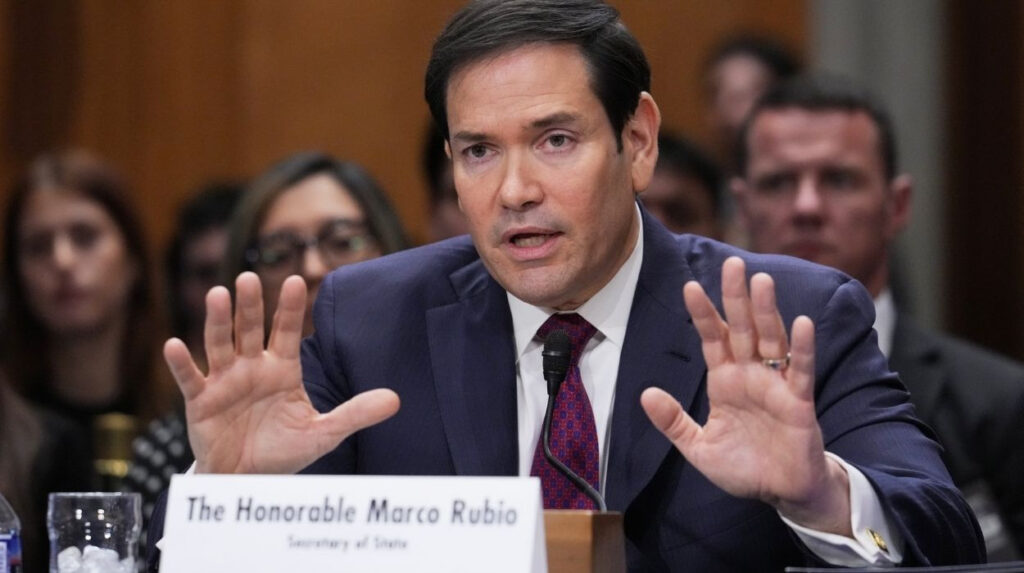
Washington, D.C. — A heated Senate hearing this week exposed deep divisions in Washington over the United States’ approach to Venezuela, even as senior officials argue that the country may be entering its first real moment of political possibility in more than a decade.
During testimony before the Senate, U.S. officials described Venezuela as having moved from a “frozen” authoritarian situation to what they called a fragile but genuine opportunity for change, while lawmakers raised alarms over persistent human rights abuses and the lack of congressional oversight of U.S. actions in the region.
⸻
From “Frozen Crisis” to Fragile Opening
According to administration officials, just one year ago Venezuela appeared locked in a political dead end. Opposition leaders were imprisoned, exiled, or forced into hiding, while President Nicolás Maduro’s government strengthened ties with geopolitical rivals including Russia, Iran, China, and Cuba.
“For the first time in literally a decade, there is an opportunity that something could change,” one senior official told senators, cautioning that progress is not guaranteed but that the political dynamic has undeniably shifted.
Officials emphasized that any transformation must be driven primarily by Venezuelans themselves, through internal reconciliation and inclusive political participation, rather than imposed externally by the United States.

A Long Road to Democratic Recovery
U.S. policymakers compared Venezuela’s condition to that of a critically ill patient, arguing that stabilization must come before full democratic recovery. The analogy was used to justify a gradual approach, warning against expectations of immediate results.
Among the indicators of progress cited:
• The release of some political prisoners
• Reduced levels of repression, though still insufficient
• Increased public visibility of opposition voices
• Early signs of political engagement across ideological lines
Officials acknowledged that democratic transitions are rarely linear and often involve setbacks before lasting reforms take hold.
⸻
Diaspora Seen as Key to Rebuilding
The Venezuelan diaspora, particularly communities in Florida and across the United States, was highlighted as a critical factor in the country’s future. Many expatriates are seen as essential to rebuilding Venezuela’s economic and civic institutions, should conditions allow for a safe return.
“There are millions who want to go back and help rebuild,” an official noted, adding that Venezuela will eventually depend on their skills, investment, and experience.
⸻
Human Rights Concerns Take Center Stage
Despite claims of progress, several senators sharply criticized the administration’s approach. Cory Booker warned that human rights violations in Venezuela remain widespread, citing arbitrary detention, torture allegations, and the continued influence of armed groups operating with impunity.
U.S. State Department travel advisories currently warn Americans of risks including kidnapping, wrongful detention, terrorism, and violent crime inside Venezuela. Armed colectivos, criminal gangs, and foreign-linked militant organizations remain active in parts of the country.
Critics argued that any U.S. engagement that indirectly benefits security forces or militias responsible for abuses would contradict American values and require stronger congressional oversight.
⸻
Congressional Oversight in Question
The hearing also revealed broader frustration over what lawmakers described as a failure of Congress to exercise its constitutional oversight role, especially as U.S. operations in the Caribbean region reportedly cost taxpayers hundreds of millions of dollars each month.
Senators warned that without stronger checks and balances, U.S. policy risks stabilizing authoritarian systems rather than dismantling them.
⸻
What Comes Next
Administration officials insisted that the end goal remains clear: a Venezuela with legitimate democratic elections, a functioning economy, and normalized relations with the United States — even if future Venezuelan leaders are not always aligned with Washington.
They stressed that expectations must remain realistic.
“This is not a process you can microwave and serve in two minutes,” one official said. “But for the first time in over a decade, the direction is no longer frozen.”
⸻
Why This Matters Now
The debate comes at a moment of heightened regional instability, renewed migration pressures, and growing concern over the influence of global rivals in Latin America — placing Venezuela once again at the center of U.S. foreign policy discussions.
⸻
Punta Cana Information – USA News
Reporting on U.S. policy, geopolitics, and developments shaping the Americas.